Monday, December 29, 2008

think of kale, especially when it's -5 outside

I think about kale a lot, perhaps too much. It's an underrated vegetable for sure, and its resilience to cold and frost deserves some serious respect. I took this picture about six weeks ago in mid-November. By that time, St. Paul, MN experienced two frosts and one snow storm (when I took this picture). I harvested it the same day, to make sure we did not push our luck.
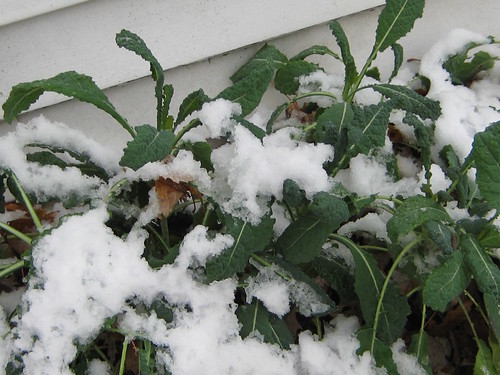
If you live in Minnesota, you know that gardens typically do not support life into November, with the exception of a few lucky pumpkins or squash. I planted this purple lacinato kale, an Italian heirloom variety, in late summer in preparation for a fall harvest, since it's always exciting to have a few things to eat after the August/September vegetable rampage. The other day it was -5 at 12:00 pm. It's amazing to think that only one month and a half has passed since eating the last gift from the garden. These thoughts keep me warm during the arctic months.

I've posted my favorite kale recipe below. Tuck it away for next season. Now, if you live in the Upper Midwest and you want to cheat, you could buy some California kale, which is in season right now, but it certainly won't be the same as brushing the snow off your own crop.

This recipe serves 4 as a side dish.

ingredients

  • 2 large bunches of kale, trimmed of tough stems
  • 1 head of garlic
  • 1 teaspoon hot red pepper flakes
  • ground black pepper
  • sea salt
  • olive oil
  • balsamic vinegar
technique
  1. heat the oven to 375 degrees
  2. wrap the garlic in foil and roast for 45 min to 1 hour - garlic should be soft and golden brown. set on the counter to cool.
  3. while garlic is roasting, bring a large pot of water to boil and add a big pinch of sea salt.
  4. put the kale in the pot and blanch for 3-4 minutes, until thickest part of leaves is tender (but not mushy!).
  5. remove kale from pot, put it in a colander, and run cold water over it until it's very cool to the touch.
  6. using a clean dish towel, squeeze all of the water out of the kale, then pull the individual leaves apart.
  7. when garlic has cooled, slice the top of the head using a sharp serrated knife and squeeze garlic into a small bowl (it should be nice and pasty at this point). add a pinch of salt and black pepper.
  8. heat two tablespoons of oil in a small skillet. when the oil is hot, add the red pepper flakes and garlic, stirring constantly for 1 minute to keep them from burning.
  9. add the kale and saute for 3-4 minutes until hot. remove from heat and stir in a splash of vinegar and another pinch of sea salt. Serve hot or luke warm.

Sunday, December 21, 2008

depression = polenta and fried eggs


If my last recipe wasn't thrifty enough for you, then hold on, because this is about as cheap as one can possibly eat. Everyone is saying that the economy will only get worse, so enjoy potato leek soup while you can - it may soon be a luxury.

Every so often, our family faces an empty refrigerator, and just when we're about to order pizza or consider going out, we go back to this recipe as an extremely simple, delicious meal from pantry staples. Polenta, or grits if you live below the Mason-Dixon, are a true blessing to the weeknight chef. Otherwise known as coarsely ground cornmeal, polenta is available at any grocery store, and many co-ops offer it in their bulk sections. It keeps in your pantry indefinitely, so it's an item every home chef should have on hand. Also, if you live in the Midwest, polenta is often ground from local corn - a good way to continue eating locally during the cold winter months.

Aside from olive oil and parmesan cheese, the only other ingredients you'll need are eggs. At around $3.00 per dozen, organic eggs are perhaps the cheapest source of animal protein available to the frugal locavore. You could save money buying conventional, manufactured eggs, but once you learn about the conditions in which those birds live, you'll be happy to shell out an extra dollar for some ethical, quality product. Besides, if you eat eggs as a way to cut down on the amount of meat you buy, spending a little extra should not be a big deal.

I saw this specific recipe in the NYT's Dining section, which is an excellent source for simple meal ideas (especially the Mark Bittman articles). Serve it with a salad or some sauteed greens for a complete, balanced meal.

This recipe serves 4 people.

Ingredients:

  • 4 1/2 cups low-sodium broth or water
  • 1 1/2 cups polenta (not quick-cooking), coarse corn meal or corn grits
  • 3/4 teaspoon salt
  • 2 to 4 tablespoons butter
  • 1/4 teaspoon freshly ground black pepper, more to taste
  • 1 1-ounce chunk or 1/4 cup grated Parmesan cheese
  • 2 tablespoons olive oil
  • 8 large eggs
  • Coarse sea salt for garnish.
Technique:
  1. In a large pot, bring broth or water to a simmer. Stir in the polenta and salt. Simmer, stirring frequently, until thickened to taste, 10 to 20 minutes. Stir in butter and pepper; cover pot to keep warm.
  2. Using a vegetable peeler, slice cheese into slivers, or grate it on largest holes of a box grater.
  3. In a large skillet, heat 1 tablespoon olive oil until very hot. Fry 4 eggs until edges are crispy and yolks still runny. Repeat with remaining oil and eggs.
  4. Pile polenta into 4 bowls and top with cheese and then fried eggs. Garnish with sea salt and more pepper and serve.

Monday, December 15, 2008

recession = potato leek soup

During a recession, many people look critically at their grocery bill as an opportunity to cut costs. This is a good idea, as long as you don't sacrifice healthy, seasonal, high-quality products for mass produced items at a lower cost. Rather than use the economy as an excuse to stop shopping at the co-op, perhaps you should rethink exactly what you're buying, and how you're preparing it. For example, you could eat less meat, or purchase seasonal produce that typically costs less than off-season delicacies (such as strawberries in January, which you shouldn't be buying in the first place). If you live in northern climes, your choices will be limited, but the payoff is huge, both economically and emotionally.

If a bull market is steak and lobster, then a bear market is potatoes and leeks, preferably in the form of soup. With a dollop of butter or sour cream, and some good bread, this soup is a filling winter meal that costs less than a six pack.


Millions of people have survived on the potato alone. If you have access to water and some onions or leeks, a whole world of flavor awaits. This recipe appears on the first page of Julia Child's epic "Mastering The Art of French Cooking," and with good reason. The simple combination of inexpensive, seasonal vegetables embodies the frugality of peasant cooking without sacrificing flavor. More importantly, excluding salt and water, this recipe only has two ingredients. It is the easiest soup recipe I've ever made. Anyone can and should make homemade soup. No excuses.

This recipe serves 6 people.

ingredients:

  • 1 lb peeled potatoes, thinly sliced (any variety will do, but I like Yukon Golds)
  • 1 lb thinly sliced leeks, or sweet onions, thinly sliced (white and light green parts only)
  • 2 quarts water
  • 1 TB salt
optional:
  • 3 TB butter
  • 3 TB minced parsley or chives

technique:
  1. bring water to boil in a large soup pot
  2. add salt and vegetables, bring to boil
  3. lower heat and simmer, partially, covered for 40-50 minutes
  4. turn off heat, and using a potato masher or empty beer/wine bottle, puree the vegetables in the pot by pressing them against the bottom of the pot (this is much easier than it sounds)
  5. if using butter and herbs, stir them in and serve immediately. a dollop of sour cream on top also works well.

Tuesday, December 9, 2008

i just have to write about shish

On this busy section of St. Paul's Grand Avenue, a very wise man has reinvented Middle Eastern cuisine in the Midwest. This cozy, sleek little restaurant, simply known as Shish, not only has a solid menu of freshly prepared Middle Eastern staples, but it has managed to produce these dishes using a lot of natural, local ingredients.

With our toddler in tow, my wife and I stumbled into Shish this evening for a quick meal. This was my first time eating there, but my wife had been to Shish once before and was anxious to return.

We spent at least five minutes combing the large menu to make a selection, but the lure of freshly made falafel sandwiches proved too strong. I was particularly eager to try Shish's falafel, as one of my preferred vendors is another St. Paul gem, Abu Nader.

After placing our order, I noticed a sign on the wall promoting an "organic hamburger" special. Despite a recent surge in popularity, it is awfully difficult to locate organic meats in Minnesota restaurants, especially in less formal eateries. I then asked one of the employees if all of their meats were organic or free range, and was told "hold on, I'll ask the manager."

A friendly, excited-looking man appeared, and boldly told us that they only use organic ground beef, and all of their other meats are procured from sustainably minded, local producers. The manager then said "Wait here. I will show you the ground beef." He vanished into the kitchen and returned holding a package of Dakota Beef, which appears to be a reputable Midwest producer of organic beef.

The manager then said: "We buy only high quality meats from local producers, because people come here for the food, and we want to give them the good stuff." Right on.

Needless to say, our falafel sandwhiches were superb, tasting of all the good stuff this little restaurant has so carefully sourced for its patrons.
I don't think they have an official website, but you can find basic info about the restaurant here. And if you have seen their site, please post the url here.

Shish
1668 Grand Ave.

St. Paul, MN 55105

651.690.2212

Update 07/08/09: Shish now has a website.

Sunday, November 30, 2008

the locovore's holiday

Thanksgiving is the food holiday. Christmas and Easter have their hams, and Halloween its candy, but none of the other major U.S. holidays are as explicitly tied to the stomach as Thanksgiving. After all, the image that appears in most people's minds is a feast at which the pilgrims give thanks to native Americans for their generosity in helping the new Americans survive the harsh winters of their new found home. It also celebrates the riches of the fall harvest, which is perhaps the most exciting part of the holiday to gastronomes. So not surprisingly, Thanksgiving is an exceptional opportunity to build a menu of local foods from area farmers and artisans. Even in northern climes, Thanksgiving typically arrives during the very tail end of the fall produce season, and many farmers' markets hold special market days on the Wednesday before Thanksgiving.

What's more, holidays are great excuses to break from routine and seek out some truly unique food items. This makes Thanksgiving an excellent time of year to expand your local food knowledge and cooking repertoire, even if you don't consider yourself a rabid locovore. To give you some examples of how one family decided to spend their Thanksgiving dollars and calories, I've posted our menu below, which we served to 10 family members. We didn't purchase every ingredient from in-state sources (in our case Minnesota), but we did try to design a menu that used as many local products as possible, given our particular climate. I've listed each menu item and the origins of its major components below, as well as any relevant links.

aperitifs
Summit Winter Ale (Minnesota)
Schell's Pilsner (Minnesota)
Vinho verde (Portugal)

hors d'oeuvres
potato chips (Old Dutch, Minnesota)
assorted pickled peppers (our garden)
dry-cured salami (Volpi, Missouri)
marinated olives (Spain)

roasted beet salad
organic gold beets (Wisconsin)
Sartori parmesan-style cheese (Wisconsin)
organic radicchio (California)
olive oil (Italy)
balsamic vinegar (Italy)
organic walnuts (unknown)

stuffed turkey breast with prunes
organic, free-range turkey breast (Farm on Wheels, Minnesota)
organic pork shoulder (Farm on Wheels, Minnesota)
pancetta (Italy)
bread crumbs (old bread from New French Bakery, Minnesota)
parmesan-style cheese (Sartori, Wisconsin)
organic rosemary (Rockspring Farm, Wisconsin)
organic sage (Rockspring Farm, Wisconsin)

acorn squash risotto
acorn squash (Minnesota)
onions (Wisconsin)
organic butter (Organic Valley, Wisconsin)
parmesan-style cheese (Sartori, Wisconsin)
arborio rice (Italy)
olive oil (Italy)

sauteed brussel sprouts with pancetta

brussel sprouts (Minnesota)
organic rosemary (Rockspring Farm, Wisconsin)
pancetta (Italy)

bread
baguettes (New French Bakery, Minnesota)

wine
Yali Cabernet-Carmenere (Argentina)

apple tart
harolson apples (Minnesota)
flour (Minnesota)
organic butter (Organic Valley, Wisconsin)
organic cream (Organic Valley, Wisconsin)
organic eggs (Crystal Ball Farms, Wisconsin)
Cognac (France)

Friday, November 21, 2008

a sustainable strip club?

I'll start this post by saying that this is the first review of St. Paul's most important new restaurant, The Strip Club, that will not include commentary regarding the clever/cheeky nature of said establishment's name. Love it or hate it, it's what the forward-thinking owners of this beacon decided to call it, and I think we have more important topics to discuss, such as the vittles served within. It should also be noted that the chef and owners are fervent supporters of local foodstuffs, so practically everything served at the place is highly seasonal and grown by local farmers.

I'll keep this small but filling. My wife and I visited The Strip Club for the first time for our fifth wedding anniversary. As young parents, and resident East Siders, we don't leave the house for a fancy date as often as we would like, so this outing carried significance beyond the value of a mere wedding anniversary. That said, we entered the fine old building with only one preconceived rule: "eat and drink whatever you want."

The evening digested as follows.

apperetif #1:
old fashioned - just like grandpa's
moscow mule - refreshing, yet predictable

first course:
foie gras* - this local version of the French classic changed my life
french fries - absolutely perfect

*I'll admit, not all foie gras production is ethical or appetizing, but the Gasset family in Caledonia, MN demonstrates a respectful practice of this ancient technique.

apperetif #2:
old fashioned - no comment
moscow mule - no comment

second course:
grilled caesar salad - warm, crisp, and smoky, this salad redefines entree
spinach, beet, and goat cheese salad - simple and seasonal, a must-order

main course:
bone-in ribeye - an intimidatingly sized portion of the best grass-fed beef. hallucinatory.
NY strip steak (the restaurant's namesake) with blue cheese and scallions - exactly what it should be. a juicy, meaty, thick steak, cooked perfectly (rare to medium rare)

wine:
I don't remember, but it was f'in good.

dessert:
flourless dark chocalate tart (we split it) - not unlike crack/cocaine
some-port-from-Washington - a triumph. the perfect pairing for an illicit dessert

coffee:
single espresso - as it should be

To save you the trouble, I scoured the interwebs to date and collected the most prominent reviews of the Strip Club to date. However, this list does not include the reviews written by The Pioneer Press and Mpls|St. Paul Magazine, who still think it's ok to hide their "archived content."

Star Tribune review
City Pages Dish review
City Pages blog mention
Maria Energia (East Side St. Paul-based green blogger)
Aaron Landry (MN food bloger)

I also found some patron-generated photos on flickr.

Sunday, October 26, 2008

simple provisions: a convenient way to buy the basics

Remember how grandma used to fondly recall the gentle clink of glass milk bottles on the porch? And the peace of mind achieved by knowing that your basic dairy, egg, and bread needs will be met every other week, without having to get in the car? Chances are, some thoughtful person in your geographic locale may be delivering farm fresh products to your neighborhood for a fair price. If you live in the Twin Cities, and enjoy buying high quality, local products from farmers directly, I urge you to try Simple Provisions. Started up by Carter Beck, a Stillwater, MN resident and locavore extraordinaire, Simple Provisions fills a much needed gap in any sustainably-minded family's food procurement model by delivering a select number of basic products, including milk, butter, eggs, bread, steaks/chops, coffee, and even some produce items.

The model is simple: set up an account via email, deposit some money into it via PayPal, and create a "standing order" of the items you want to receive on a regular basis. Our family has recieved milk, butter, eggs, and bread for nearly 6 months now, and the delivery is now a major event.

From the website:

Simple Provisions is a home delivery service featuring organic milk in returnable glass bottles and other local, sustainable and organic farm products. Weekly delivery to homes in and around the St. Croix Valley, Minneapolis and St. Paul.

Simple Provisions customers enjoy a direct and vital link to local land stewards who practice sustainable, ecological farming. A Simple Provisions delivery serves as a complement to purchases from the local farmers' market or CSA memberships.