Showing posts with label news. Show all posts

Wednesday, June 24, 2009

a few thoughts on the cookie dough recall

It is a national story, but I read about the recent Nestle cookie dough recall as a local article in the St. Paul Pioneer Press. Six Minnesotans, between 2 and 18 years of age, became quite ill from eating raw dough. This is disturbing on many levels, and it seems food recalls are simply part of "what happens." Is anyone outraged? At some point people do eat at their own risk, but as a society we can surely do more to prevent the spread of tainted food. I imagine that warnings printed on labels often do little to prevent people from eating certain foods raw, and despite manufacturers' and public health officials' official concerns, people enjoy eating cookie dough. They also enjoy runny eggs, rare steaks, and bloody hamburgers. Even steak tartare has enjoyed a renaissance as of late. If sourced and handled appropriately, many allegedly dangerous foods can be safely enjoyed in a raw or lightly cooked state. Mass-produced, industrial tubs of dough do not belong on this list, but their existence influences how people, including public officials, view the honest, homemade variety.

It begs the question: how could there be such a huge market for manufactured cookie dough? Please tell me. The concept is absurd, but an insipidly clever marketing idea. Busy people, who apparently don't have enough time to measure more than four ingredients, can purchase this dough-like substance, press or cut it into shapes, and convince themselves that they are, in fact, baking. It's akin to serving microwave bacon. I have tears in my eyes.

Real cookie dough is a wonderful thing. The alchemical marriage of flour, butter, sugar, and chocolate chips is truly potent, an ethereal mix to be honored in its own right. Freshly baked chocolate chip cookies are wantonly desired by children and adults across this great country, and they are one of the few truly notable American foodstuffs. We don't have many. Must we desecrate them through food engineering and negligent mass production?

We have all heard the warnings. Do not eat raw eggs. Do not eat cookie dough, because it contains raw eggs. When was the last time you heard of someone dying from a raw egg that contained e. coli bacteria? I encourage you to read the Wikipedia entry for this bacterium, as it appears poop is the typical culprit. Yes, poop. Salmonella is most often the bacterium associated with raw eggs, so it is unclear how e. coli made its way into Nestle's cookie dough, but we could take a wild guess. Public health experts and Nestlé officials: please post a comment. I also recommend reading this article from the Today Show, which describes how e. coli is most often found in raw meat or unwashed fruits and vegetables.

What bothers me the most is the MN Dept of Public Health's first quote in the aforementioned article:

Health officials warned that eating any kind of raw dough creates potential for illness. "Cookie dough, whether purchased in a tub from the store or made at home from scratch, should not be eaten raw," said Carlota Medus, a foodborne-illness epidemiologist with the Minnesota Department of Health.


Rather than push Nestle to explain how such contaminants could enter their supply chain, our public servants simply cover Nestle's ass by implying that consumers may have brought this upon themselves by eating raw cookie dough. What a joke. If you care to make your own cookie dough, from the best ingredients you can find (organic butter, organic sugar, organic eggs, and chocolate chips), and store them properly, it seems the risk of contamination
is very low, perhaps even nonexistent. Maybe I'm missing something here, but my family regularly eats sunny-side-up eggs, and spoonfulls of raw cookie dough. We have never been ill. My pregnant wife eats these things.

The warnings exist to cover the lowest common denominator, the lowest quality (but cheapest!) ingredients one could possibly procure from a discount, big box grocer. But even then it's probably a low risk. Only when our dough is manufactured on a massive scale, by assembly line workers with bad habits, is there such a risk. If your grandma doesn't wash her hands, your family may get ill. If the "dough mixing technician" at the Nestle plant doesn't wash his hands, an entire city may puke its guts out, literally.

I'll leave you with the list of ingredients for one of the recalled products: "Ultimates Peanut Butter Cups, Chips & Chocolate Chunks bar." I've highlighted the nasty/processed/synthetic ingredients in red, if e. coli isn't enought to stop you. Bon appetit!


INGREDIENTS: BLEACHED ENRICHED FLOUR (WHEAT FLOUR, NIACIN, REDUCED IRON, THIAMIN MONONITRATE, RIBOFLAVIN, FOLIC ACID), SUGAR, MARGARINE (PALM OIL, WATER, SUNFLOWER OIL, HYDROGENATED COTTONSEED OIL, SALT, VEGETABLE MONO- AND DIGLYCERIDES, SOY LECITHIN, SODIUM BENZOATE, CITRIC ACID, NATURAL AND ARTIFICIAL FLAVOR, BETA CAROTENE COLOR, VITAMIN A PALMITATE ADDED), NESTLE SEMI-SWEET CHOCOLATE CHUNKS (SEMI-SWEET CHOCOLATE [SUGAR, CHOCOLATE, COCOA BUTTER, MILKFAT, SOY LECITHIN, VANILLIN - AN ARTIFICIAL FLAVOR, NATURAL FLAV0R]), PEANUT BUTTER FLAVORED MORSELS (SUGAR, PALM KERNEL OIL, PEANUTS, PEANUT FLOUR, LACTOSE, WHEY [FROM MILK], MILKFAT, NONFAT MILK, SODIUM CASEINATE [FROM MILK], BUTTERMILK, HYDROGENATED PALM OIL, SALT, SOY LECITHIN, ARTIFICIAL FLAVORS), PEANUT BUTTER CUPS (SUGAR, PALM KERNEL OIL, PEANUT FLOUR, NONFAT MILK, PEANUT BUTTER [PEANUTS, SALT, PARTIALLY HYDROGENATED PALM OIL], PARTIALLY HYDROGENATED PALM OIL, SALT, COCONUT OIL, COLOR ADDED [RED 40 LAKE, YELLOW 5 LAKE AND BLUE 2 LAKE], SOY LECITHIN, TBHQ, CITRIC ACID), WATER, CORN SYRUP SOLIDS, MOLASSES, EGGS, EGG YOLKS, BAKING SODA, SALT, SODIUM ALUMINUM PHOSPHATE, VANILLA EXTRACT, VANILLIN - AN ARTIFICIAL FLAVOR

P.S. The voluntary recall includes 43 varieties of cookie dough sold by Nestle. You can access nutritional information about each of them at Nestle's wonderful cookie dough site: http://www.verybestbaking.com/. Don't event get me started on the ridiculousness of that name. Very best indeed.

Saturday, May 30, 2009

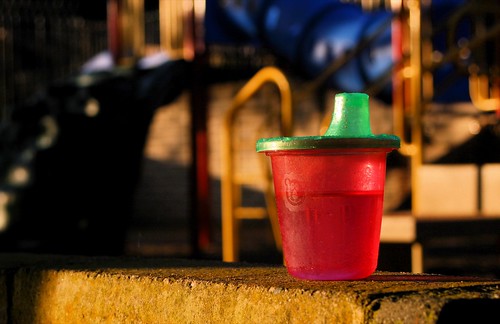
MN first state to ban toxins in baby bottles and sippy cups

The June issue of the Minnesota Women's Press contains a news brief about a very progressive piece of legislation, the Toxic Free Kids Act, that was recently signed into law. From the article:

"After Jan. 1, 2011, parents will know that regardless of what store you are in, the baby bottles and 'sippy' cups will be BPA (bisphenol A)-Free," said Rep. Karen Clark (DFL Minneapolis), chief author of the House Bill. Sen. Sandy Rummel (DFL-White Bear Lake) was the chief author of the Senate version. More than 200 studies of BPA have found that low-dose exposure is linked to heart disease, caner, neurological impairments and reproductive problems.

To read a detailed news release about the legislation, visit Healthy Legacy, a MN-based public health coalition. You can also follow them on twitter.

Photo: Randy Son Of Robert on flickr

Monday, March 23, 2009

white house breaks ground on a kitchen garden!

This is exciting. In classic savvy PR fashion, the White House blog today featured a post (w/ pics) about a groundbreaking ceremony for the first family's new vegetable garden. This event is significant for obvious reasons related to the promotion of healthy, sustainable eating and living (as well as frugality and self reliance), but it also highlights the fact that this is likely the first such garden to exist on White House grounds, at least in recent times. Let's hope they don't use those heirloom tomatoes to top a dubya-style frozen hamburger.

From the post:

"This is a big day. We've been talking it since the day we moved in," said the First Lady as she and two dozen local students broke ground on the White House Kitchen Garden on the South Lawn of the White House. Those students will be involved in the garden as it develops and grows, producing delicious, healthy vegetables to be cooked in the White House Kitchen and given to Miriam's Kitchen, which serves the homeless in Washington, DC.


Fashion note: It was a bad decision for Mrs. Obama to wear patent leather boots in the garden. I think some wellies and trousers would have been more appropriate (and fashion-forward).

Wednesday, March 18, 2009

extremely fast food: new "pizza vending machine" unveiled in italy

Redefining the concept of convenience food, an Italian business man has just introduced a new vending machine that creates hot pizzas in about three minutes. The pizza-centric "Slice" blog, which is part of the Serious Eats community, posted a photo and additional information earlier this week. Read the full post here.

While Italians typically value high-quality, local ingredients, I don't expect these machines to come stocked with artisanal mozzarella and seasonal, heirloom tomatoes. My advice: buy a slice from a local vendor, which also supports a several local jobs, rather than pumping money into this mass-produced, slightly depressing concept.

Saturday, January 31, 2009

great article in Star Tribune about local food trends

In case you missed it, earlier this month the Star Tribune's Nancy Ngo published a great article on food trends for 2009. Among other more trivial bits, such as speculation about Peru becoming the next hip food culture for Americans, the article does highlight some key trends related to home cooking and eating sustainably.

For several authorities, it's a deliberate, unapologetic return to home cooking. In its January issue, Food & Wine magazine names home cooking as the biggest food trend of the year, with an emphasis on retooled comfort food classics, entertaining on a budget and "exotic" recipes made easy.

The National Restaurant Association calls it philosophy-driven choices, this continuing trend toward "green" eating in its many permutations. And the chefs expect to see much more of it. In fact, local produce ranked No. 1 in the What's Hot survey. Nine in 10 chefs said demand for locally grown menu items would increase, along with demand for sustainable seafood, organic produce and free-range meats.


Monday, January 19, 2009

edible twin cities: the locovore's local publication


In case you haven't seen it yet, Edible Twin Cities is a newer quarterly publication dedicated to "celebrating the abundance of local foods, season by season" in the region. Printed copies are available for free at many coffee shops, grocery stores, and other business, but you can also have it delivered to your door for $28.00 per year.

So far I've only looked at one issue, but it seems like something any locovore would enjoy reading.

From the website:

Our mission is to transform the way residents of the greater Twin Cities area shop for, cook, eat, and appreciate the food that is grown in our region. Through our publications and website, we connect consumers with local growers, retailers, chefs, and food artisans, enabling those relationships to grow and thrive in mutually beneficial, healthy and economically viable ways. Edible Twin Cities is for those who are interested in:

Learning more about what's available in the greater Twin Cities area in terms of restaurants, farmers' markets, food events and festivals; informative and entertaining books to read and wonderful products to try.
Eating delicious, well-prepared seasonal foods
Getting to know the people who grow, produce, cook and sell those foods

Wednesday, January 7, 2009

want to read more about traditional dry-curing?

While looking through a folder of old recipes and and other junk, I found a printed copy of a great article on dry-curing that appeared in the New York Times in May of 2006 (and now that they offer their complete archives, free of charge, I can pass along the link). Entitled, "Dry Cured Sausages: Kissed by Air, Never by Fire," the article documents how this traditional method of food preservation is fading away in the US, particularly due to increasingly restrictive FDA regulations. From the article:

"I would rather go out of business, like all those other guys, than ruin my product by freezing it or cooking it or irradiating it," Mr. Buzzio said.

In case you missed it, my last post details my first foray into dry-curing - the sausages are aging in my basement at the moment.

Monday, September 22, 2008

sow the seeds: support local agriculture longer, more often

I recently read about how Minnesota's own Institute for Agriculture and Trade Policy launched "Sow the Seeds," a fund to support sustainable food systems. According to the website, STS "fosters sustainable food systems in the Upper Midwest," and, it appears one of the main ways they do this is through grants and other tools to help small farms produce good food, longer.

From the website:

Imagine serving lush local tomatoes at your next Thanksgiving dinner. How about locally grown strawberries on Memorial Day? Sow the Seeds (STS) wants to make these dreams a reality by helping area farmers develop a longer growing season, and, in the process, create a more vibrant and diverse local food system.

STS is launching the "Local Longer" campaign to help make the local produce season longer for farmers and for shoppers who love local food. By enabling farmers to plant earlier in the Spring and harvest later in the Fall, season extension can help farm businesses grow and the supply of locally grown fruits and vegetables expand.

Saturday, July 19, 2008

rotten tomatoes

Today's St. Paul Pioneer Press contained two national wire stories about the current salmonella scare surrounding tomatoes and other fresh produce. The first, "Growers: Tomato probe flawed" (McClatchy), outlines the tension between farmers and the Food and Drug Administration. The second, "Fear of tainted food growing, poll indicates" (Associated Press), describes the results of a new Associated Press-Ipsos poll about changes in eating and buying habits during the past six months.

They're both worth reading, but I wanted to call attention to a few passages from the second article, which outlines the current level of fear permeating the marketplace:

While the poll found that three in four people remain confident about the overall safety of food, 46 percent said they were worried they might get sick from eating contaminated products. The same percentage said that because of safety warnings, they have avoided items they normally would have purchased.

Wow. If the poll is accurate, basically half of the country is worried about the safety of the food they eat. Sadly, if you look at in a different way, the least processed foods (fresh vegetables) are perhaps most at risk for contamination in our current industrial food production system, since you can't pasteurize, reconstitute, or preserve them as you can a box of dried macaroni and cheese or a mass-produced hot dog.

To put this in a broader context, the article also states that "In addition to the salmonella outbreak, this year has seen the largest ground beef recall in history, raising consumer concerns reflected in the poll." Do you remember the beef recall? It's easy to forget amidst the deluge of tainted products.

Furthermore, the article suggests that most people would support increased regulation of produce production and distribution, but that's only a small piece of the puzzle. The broader issue is the increasing distance, mechanization, and general over-complication of our mainstream agricultural system, all of which is driven by the race for lower food prices. For example, does someone in Duluth, Minnesota really need Peruvian asparagus in September?

(photo credit: [177] on Flickr Creative Commons)

Friday, May 16, 2008

attack of the genetically engineered sugar beets

The Organic Consumers Association, a great watchdog/advocacy group for sustainable foods, recently issued an alert about the US governments approval of genetically engineered sugar beets:

"Since half of the granulated sugar in the U.S. comes from sugar beets, a move towards biotech beets marks a dramatic alteration of the U.S. food supply. These sugars, along with GE corn and soy, are found in many conventional food products, so consumers will be exposed to genetically engineered ingredients in just about every non-organic multiple-ingredient product they purchase."

I recommended using their email petition to take action now (located on the same page).

Friday, July 27, 2007

from NPR: more supermarkets selling local produce

To follow up on my previous post "number of farmers markets more than doubles", I'm posting a link to a great NPR segment I heard this morning. Their story, "Supermarkets Tout Fresh, Local Offerings," outlines how some large grocery chains are sourcing more of their produce locally, from smaller producers.

This is great news for everyone, and especially for people who don't live close to a farmers' market. I wonder what the cost difference is between local produce sold at grocery stores versus farmers' markets? I would bet that, on average, most produce at farmers' markets costs less per pound than what they're selling at the big stores. I hope stories like this can help more people consider their local greenmarket as a viable, economical alternative to grocery stores (at least for meat and produce), rather than just a quaint diversion during the summer months. For us, the local markets have been critical in helping us stay within our $60 per week grocery budget.

Tuesday, July 17, 2007

the cost of staying home? $1 million, but don't worry - it's worth it

Good morning. MSN Money recently posted a fairly balanced article about the economic costs of being a stay at home mom. Here's an excerpt:

Now, can you afford this? Your initial response, and the response of many two-income couples, might be no. But two incomes can be deceiving. You earn more, but you also probably spend more. When you look at what many SAHM Web sites call “the cost of work” -- what you pay in travel, wardrobe and eating out more frequently, plus the cost of child care -- your salary may not be the big asset you thought it was. Add to that the fact that your income is taxed at a higher rate thanks to that marriage penalty, and you might be dismayed to see what your second income (or his, if it's the smaller one) boils down to.


Saturday, July 14, 2007

number of farmers markets more than doubles

A friend recently told me that the present number of farmers markets in the US is more than double the number in the early 1990s. I did a brief search and found a great chart from the USDA detailing the growth of markets from 1994 to 2006. It's quite impressive. I was at our local market this morning and it was absolutely packed, so the growth is definitely believable.

This trend is very reassuring. Once you've started shopping at the farmer's market, it's hard to imagine buying meat and produce from anywhere else - at least during the summer.

The USDA site also has page where you can find a market in your state and city.