Showing posts with label commentary. Show all posts

Monday, January 4, 2010

holy f. i just read the ingredient list for Cool Whip.

Well, the planets aligned and somehow I ended up with a donated tub of Kraft (owned by Phillip Morris) Cool Whip in my fridge during the holidays. I ate this amorphous whipped topping more than I care to admit during my childhood, but I never really cared to look at the ingredient list. OMFG. Not only is it long and loaded with polysyllabic chemical compounds, but the ingredients fail to include the one substance that most quickly comes to mind. Can you guess which one?

WATER, CORN SYRUP, HYDROGENATED VEGETABLE OIL (COCONUT AND PALM KERNEL OILS), HIGH FRUCTOSE CORN SYRUP, LESS THAN 2% OF SODIUM CASEINATE (FROM MILK), NATURAL AND ARTIFICIAL FLAVOR, XANTHAN AND GUAR GUMS, POLYSORBATE 60, SORBITAN MONOSTEARATE, BETA CAROTENE (COLOR).


Cream! It seems you can have whipped cream without eating cream. Of course, they did manage to squeeze in some sodium caseinate, which is a milk-based derivative, but it seems Cool Whip exists without any naturally occurring ingredients (except water).

Mmmm... Sorbitan monostearate.

Tuesday, September 22, 2009

grocery wars

I'd prefer to write about this epic struggle, but one can only dwell in fantasy for so long. The top business story in Sunday's St. Paul Pioneer Press, "Food Fight," details the present landscape of mainstream grocery stores in our oft named battleground state. Well written and detailed, the piece describes how grocery market share in MN has changed over the past few years, particularly in the Minneapolis/St. Paul metro area.

The overarching trend discussed in the article is clear: huge, extreme discount stores - mainly Walmart and Target - are attracting more and more shoppers away from Minnesota-based or regional chain stores, such as Kowalski's, Cub Foods, and Rainbow Foods. Many key issues are addressed, including unionization, loss-leaders, and extreme discounting (Walmart vs. Cub). Aside from the fact that co-ops and co-op-like stores aren't mentioned in the article, the most interesting part (for me) is the perspective offered by and about smaller grocery retailers, such as Kowalski's. Here's an excerpt:

The nine-store Kowalski's strategy is to hunker down, focus on quality and see when the economy improves, said Jim Kowalski. "We're not doing any growth right now," he said. "We don't pretend to compete in the price wars that seem to be going on."


Let's face it. There are at least as many types of grocery shoppers as there are brands of frozen pizza at Cub Foods (which was 27 last time I checked). Some people are loyal to one store, at which they buy everything. Others play hopscotch with several retailers, buying different items across multiple stores. Still others are perhaps a bit more schizophrenic, shopping at a different store depending on immediate geographic location (work, school, neighborhood) or emotional state (indulgent, frugal, or green). Such is the state of our food culture.

I am not a grocery store business expert or analyst, but I do buy a lot of food and attempt to follow these trends closely. To date, I have spent money at nearly every grocery retailer mentioned in the article, the exceptions being Aldi's/Trader Joe's and Walmart/Sam's Club. However, for the past 5 years or so, I've chosen to abandon corporate grocery stores in favor of co-ops, of which there aren't nearly enough. That's a different blog post altogether.

What if the challenge Kowalski's faces is an opportunity? A crowded market is dangerous for business as usual, so perhaps the time is right for some lasting innovation among smaller grocers. Jim Kowalski's quote acknowledges that his stores, despite their focus on "quality" (whatever that means), cedes a defeatist outlook by using expressions like "hunker down" and a lack of "growth." He claims to not "pretend to compete in the price wars," but his market share has decreased as a result of shoppers migrating to newer, bigger stores. He doesn't compete because he can't, at least not solely on the price of Brazilian orange juice concentrate, yet he would like to open additional stores.

Fundamentalist discount shoppers seek the lowest prices on food products, without much (or any) regard for the costs associated with producing, distributing, or selling those products, such as the energy (e.g. gasoline), environment (e.g. chemical pesticides), and community (e.g. wages). Smaller grocers should forget about these people. They live on a different planet or will have to soon.

Rather than use the same vocabulary and approach to growth (i.e. increasing profits, number of stores, and market share), smaller grocers should be and celebrate what the super stores are not: progressive, community-building organizations that sell healthy, fairly priced products (a lot of which are local) and create sustainable, livable jobs. If the tremendous growth of farmers' markets is any indication, there is an increasingly vocal segment of the grocery-buying public that seeks a different choice. Find them and sell them what they want. Co-ops have figured this out, so why can't the local supermarket? Such an outlook may squash a regional executive's dream of creating the next national chain store, but within a different framework, that executive no longer will be needed, and neither will the additional 5 stores he or she hoped to open. A small, efficient neighborhood store can hold a reasonable monopoly. Why must we always need more?

Here's an idea. Maybe the Kowalski's in Stillwater could sell meat, dairy, and produce from the St. Croix river valley, and the Grand Avenue store could sell products from Gardens of Eagan. Add a kick-ass bulk section and show people how to use it. If you can't compete on the price of Tyson chicken fries, then sell real chickens from Callister Farm. Think differently. Yes, these products cost more, but an educated customer understands and appreciates the quality of such products. If I want to find the lowest price on crap I will travel to the cheapest crap heap, of which there are many.

Perhaps a plant analogy is appropriate: grow and manicure a small but healthy bonsai that lives for 200 years, rather than 10,000 acres of wood-pulp aspens to be harvested en masse, or consumed by fire, in a few short decades.

Wednesday, September 2, 2009

reinvent your appetite: the relative value of local food

Last week, the Minneapolis Star Tribune contained a short article about the cost of eating as a locavore - "Making the local food movement accessible." Written by Hayley Tsukayama, a grad student, the piece describes how the author seeks to eat more local foods but also maintain a trim grocery budget. Here's an excerpt:

"I was so excited that I forgot a key fact: I'm a single, omnivorous graduate student who normally buys groceries at Wal-Mart. And while the local produce at most farmers' markets is the same price or cheaper than at supermarkets, the meat is far more expensive. I believe that good food is worth the higher prices, but after rent and student loans it's hard to finance a foodie habit."

I'll start by saying that I'm not a big fan of the word "foodie." In a creepy way, it reminds me of the Crucible-era word "goody." Besides, it's too cute, and helps stoke the fire that enjoying high quality food is somehow elitist. By our pitiful standards of nutrition, anyone living in rural France or Italy would be a foodie - "those people make their own pesto!" As an unhealthy society, we should shun these words in favor of "healthy," "high quality," or "whole" foods, prepared from scratch (either at home or at a restaurant). Perhaps the verb "to cook" could see a renaissance.

Enough semantics. What I find interesting about this article is the frequent supposition that "going local" is simply a matter of plugging local products into the American discount "menu" and Walmart "more for less" value equation. Quite literally, we're looking at apples and oranges; or rather, locally-grown Minnesota apples (eaten in season) and dry, industrial orange-like organisms.

Eating healthy, delicious, simple food is possible at any budget. Rural, agrarian communities around the globe have demonstrated this for hundreds of years. In my opinion, one of the biggest issues is that many Americans are reluctant to adopt a healthier, more sustainable diet because it requires eating different foods and much less of certain things, such as meat.

For example, Americans eat a lot of bacon and pork chops. When you make the decision to eat local, pasture-raised pigs that are humanely treated and minimally processed (with care), it will cost more than buying a frozen mass of industrial chops from a huge company. Get over it. What this means is that you may only be able to eat pork chops once a month rather than every Wednesday. The same is true for bacon. At $1.99/pound for industrial bacon, the average person could eat bacon every morning and not go broke. Spend more on some high quality bacon and eat just a few slices on the weekend with pancakes or dice and toss it with pasta. It is time for Americans to revere high quality meat as a precious, scarce delicacy.

The same is true for other parts of the American meal. Bulk, organic oatmeal is very affordable. So is polenta. Dried pasta and rice have kept people satisfied and proud of their food culture for centuries. Remember your grandma's beef stew recipe or your aunt's green curry recipe? Perhaps it is time to rediscover these simple foods as the basics, and combine them with small amounts of more costly ingredients, such as meat, cheese, butter, milk, and olive oil. Throw some seasonal vegetables in a salad or on the side and you will enjoy a trim grocery budget, better tasting meals, and a higher quality of life. I promise.

In the author's defense, the people she interviewed suggested some novel, paradigm-shifting habits, such as eating less meat, so the article does offer some thoughtful perspective from different people who do know something about this. It also generated a number of comments - take a look.

Saturday, July 25, 2009

the organic salon: a review (and $20 coupon giveaway!)

I'll begin by confiding that I'm a Horst Rechelbacher admirer. As a Minnesotan, I derive a great sense of pride from knowing how fortunate we are to have such a visionary in our midst (technically, Horst lives across the St. Croix river, in Osceola, WI, but his businesses are located in MN). Furthermore, Aveda Corporate headquarters is located in Circle Pines, the suburb of my youth. If you're not too familiar with Horst or his endeavors, I recommend reading his Wikipedia entry. After selling Aveda to Estee Lauder in 1997 for an estimated $300 million, Horst focused more intensely on the fledgling Intelligent Nutrients (IN) brand, through which Horst has developed a complete line of organic health and beauty products, and more recently, a full service salon run out of the IN flagship store on Hennepin Avenue in NE Minneapolis.

Intelligent Nutrients products are truly awesome. If you like the Aveda line, but are seeking products that contain only natural plant/mineral ingredients (akin to Dr. Haushka), you will love IN (Aveda products do contain a number of harmful compounds, despite the earthy ethos of the their brand). But enough about the products, as this post is dedicated to the new salon, dubbed Intelligent Hair and Skin, which Horst claims is "the first ever USDA certified organic salon."

At this point you might ask: "So why should I care about an organic salon? I'm not going to eat the pomade." It is precisely that attitude which Horst hopes to transform. His new mantra: “What we put on our bodies should be as safe and nutritious as what goes into our bodies,” is not necessarily a new concept, but in true form, he is pushing it further into the mainstream.

If you signed up for IN email promotions earlier this year, you would have received a coupon for 30% off all of services (color, highlights, hair treatments and facial waxing) and a 20% discount on all salon products. A men's haircut starts at about $35, which is only a five dollars more than I currently pay, so this discount was clearly a deal for me.

Overall, the experience was great, easily worth more than the $35 sticker price. Upon being greeted at the door, I was offered a small glass of orange juice mixed with IN's Intellimune Oil - quite refreshing and exotic. My stylist, Catherine, appeared soon thereafter, and she led me into the small salon space, which is in the same room as the store. I'll admit, I've never had a facial treatment before (nor have I sought one), but a "mini" facial/massage is included with a haircut. Over the course of at least 15 minutes, the stylist massaged my head, and used several aromatic products to endow my mug with a "soft glow." Never again will I poke fun at such activities.

The massage/facial really was enjoyable, and left me feeling slightly euphoric upon sitting down for the haircut portion of the experience. Catherine proved adept at cutting hair quickly and stylishly. I didn't schedule the appointment with the intention of adopting a radically new style, the visit was more of a trim, but it was a great cut nonetheless. No gimmicks or overly earnest suggestions, just a quiet, relaxing haircut.

In writing this, I'm not trying to tell you that IN is the only place to get a great haircut - there are quite a few places where one can do that - rather, it is an experience that recognizes the many facets of wellness and well-being, such as the products with which one chooses to slather their hair or skin. These things do matter, and IN is a wonderful, locally-grown place to learn more about them.

And the giveaway? If you get a haircut at the salon, they'll give you several $20-off coupons to pass along to people you know. I have three of them left, which I'll mail to the first three readers who write a thoughtful comment below. The only requirement is that you live in MN/WI, or plan to visit Minneapolis sometime soon.

Wednesday, June 24, 2009

a few thoughts on the cookie dough recall

It is a national story, but I read about the recent Nestle cookie dough recall as a local article in the St. Paul Pioneer Press. Six Minnesotans, between 2 and 18 years of age, became quite ill from eating raw dough. This is disturbing on many levels, and it seems food recalls are simply part of "what happens." Is anyone outraged? At some point people do eat at their own risk, but as a society we can surely do more to prevent the spread of tainted food. I imagine that warnings printed on labels often do little to prevent people from eating certain foods raw, and despite manufacturers' and public health officials' official concerns, people enjoy eating cookie dough. They also enjoy runny eggs, rare steaks, and bloody hamburgers. Even steak tartare has enjoyed a renaissance as of late. If sourced and handled appropriately, many allegedly dangerous foods can be safely enjoyed in a raw or lightly cooked state. Mass-produced, industrial tubs of dough do not belong on this list, but their existence influences how people, including public officials, view the honest, homemade variety.

It begs the question: how could there be such a huge market for manufactured cookie dough? Please tell me. The concept is absurd, but an insipidly clever marketing idea. Busy people, who apparently don't have enough time to measure more than four ingredients, can purchase this dough-like substance, press or cut it into shapes, and convince themselves that they are, in fact, baking. It's akin to serving microwave bacon. I have tears in my eyes.

Real cookie dough is a wonderful thing. The alchemical marriage of flour, butter, sugar, and chocolate chips is truly potent, an ethereal mix to be honored in its own right. Freshly baked chocolate chip cookies are wantonly desired by children and adults across this great country, and they are one of the few truly notable American foodstuffs. We don't have many. Must we desecrate them through food engineering and negligent mass production?

We have all heard the warnings. Do not eat raw eggs. Do not eat cookie dough, because it contains raw eggs. When was the last time you heard of someone dying from a raw egg that contained e. coli bacteria? I encourage you to read the Wikipedia entry for this bacterium, as it appears poop is the typical culprit. Yes, poop. Salmonella is most often the bacterium associated with raw eggs, so it is unclear how e. coli made its way into Nestle's cookie dough, but we could take a wild guess. Public health experts and Nestlé officials: please post a comment. I also recommend reading this article from the Today Show, which describes how e. coli is most often found in raw meat or unwashed fruits and vegetables.

What bothers me the most is the MN Dept of Public Health's first quote in the aforementioned article:

Health officials warned that eating any kind of raw dough creates potential for illness. "Cookie dough, whether purchased in a tub from the store or made at home from scratch, should not be eaten raw," said Carlota Medus, a foodborne-illness epidemiologist with the Minnesota Department of Health.


Rather than push Nestle to explain how such contaminants could enter their supply chain, our public servants simply cover Nestle's ass by implying that consumers may have brought this upon themselves by eating raw cookie dough. What a joke. If you care to make your own cookie dough, from the best ingredients you can find (organic butter, organic sugar, organic eggs, and chocolate chips), and store them properly, it seems the risk of contamination
is very low, perhaps even nonexistent. Maybe I'm missing something here, but my family regularly eats sunny-side-up eggs, and spoonfulls of raw cookie dough. We have never been ill. My pregnant wife eats these things.

The warnings exist to cover the lowest common denominator, the lowest quality (but cheapest!) ingredients one could possibly procure from a discount, big box grocer. But even then it's probably a low risk. Only when our dough is manufactured on a massive scale, by assembly line workers with bad habits, is there such a risk. If your grandma doesn't wash her hands, your family may get ill. If the "dough mixing technician" at the Nestle plant doesn't wash his hands, an entire city may puke its guts out, literally.

I'll leave you with the list of ingredients for one of the recalled products: "Ultimates Peanut Butter Cups, Chips & Chocolate Chunks bar." I've highlighted the nasty/processed/synthetic ingredients in red, if e. coli isn't enought to stop you. Bon appetit!


INGREDIENTS: BLEACHED ENRICHED FLOUR (WHEAT FLOUR, NIACIN, REDUCED IRON, THIAMIN MONONITRATE, RIBOFLAVIN, FOLIC ACID), SUGAR, MARGARINE (PALM OIL, WATER, SUNFLOWER OIL, HYDROGENATED COTTONSEED OIL, SALT, VEGETABLE MONO- AND DIGLYCERIDES, SOY LECITHIN, SODIUM BENZOATE, CITRIC ACID, NATURAL AND ARTIFICIAL FLAVOR, BETA CAROTENE COLOR, VITAMIN A PALMITATE ADDED), NESTLE SEMI-SWEET CHOCOLATE CHUNKS (SEMI-SWEET CHOCOLATE [SUGAR, CHOCOLATE, COCOA BUTTER, MILKFAT, SOY LECITHIN, VANILLIN - AN ARTIFICIAL FLAVOR, NATURAL FLAV0R]), PEANUT BUTTER FLAVORED MORSELS (SUGAR, PALM KERNEL OIL, PEANUTS, PEANUT FLOUR, LACTOSE, WHEY [FROM MILK], MILKFAT, NONFAT MILK, SODIUM CASEINATE [FROM MILK], BUTTERMILK, HYDROGENATED PALM OIL, SALT, SOY LECITHIN, ARTIFICIAL FLAVORS), PEANUT BUTTER CUPS (SUGAR, PALM KERNEL OIL, PEANUT FLOUR, NONFAT MILK, PEANUT BUTTER [PEANUTS, SALT, PARTIALLY HYDROGENATED PALM OIL], PARTIALLY HYDROGENATED PALM OIL, SALT, COCONUT OIL, COLOR ADDED [RED 40 LAKE, YELLOW 5 LAKE AND BLUE 2 LAKE], SOY LECITHIN, TBHQ, CITRIC ACID), WATER, CORN SYRUP SOLIDS, MOLASSES, EGGS, EGG YOLKS, BAKING SODA, SALT, SODIUM ALUMINUM PHOSPHATE, VANILLA EXTRACT, VANILLIN - AN ARTIFICIAL FLAVOR

P.S. The voluntary recall includes 43 varieties of cookie dough sold by Nestle. You can access nutritional information about each of them at Nestle's wonderful cookie dough site: http://www.verybestbaking.com/. Don't event get me started on the ridiculousness of that name. Very best indeed.

Tuesday, June 9, 2009

more great reading about milk

Via the Atlantic Food twitter stream, today I discovered the rowdy food activism blog "Food Renegade." Just this morning, the site featured an extremely informative post deconstructing the benefits and drawbacks of different types of milk, as well as tips for purchasing raw milk direct from farmers. A great read if you like the other articles I posted.

Monday, June 1, 2009

good enough for grandpa: the case for whole milk

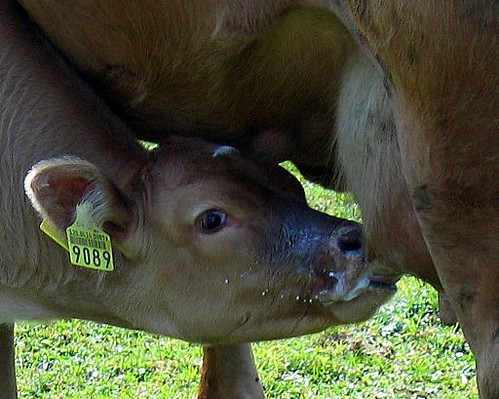
I live in a dairy state. To exist in Minnesota without an ice-cold bottle of milk in the fridge is sacrilege. For reasons of both pride and locavoracity, I am saddened by the "big milk" industry's shift away from the Midwest to California, currently the largest milk producing state (with a marketing campaign to match). Our vineyards need some work, but can we at least buy milk from Minnesota or Wisconsin? There are many small, organic producers selling delicious whole milk in our fine communities - try Crystal Ball or Castle Rock.

Despite our milk maid roots, it is always a bummer to discover that most people in this green pasture of a state prefer skim or 1% milk. We should know better, and exhibit better taste. For years we have been led to believe, by this industry and our own federal government, that low fat milk is better for us. Our fat phobic culture has skimmed the flavor and nutrition from the milk we drink, in a misguided effort to be healthy. I mean, what the fuck is non-dairy creamer, really? The thought of this junk made me so mad I looked up the manufacturing process and found some info here. No sir, it is not soy milk.

Now the facts. In the words of Nina Planck, author of Real Food for Mother and Baby:

Whole milk is what is called a complete food, because each ingredient plays its part. Without the fat, you can't digest the protein or absorb the calcium.

The body needs saturated fat in particular (monounsaturated and polyunsaturated fat can't do the job) to take in the calcium that makes bones strong. Milk fat also contains glycosphingolipids, which are fats that encourage cell metabolism and growth and fight gastrointestinal infections.


The all-important vitamins A and D are found in the fat. Historically, whole milk and butter were the best sources of these vitamins in the American diet, which had up to 10 times more of both vitamins than modern industrial diets. In skim and low-fat milk, the vitamins are removed along with the fat, so dairies add synthetic A and D. But Vitamins A and D are fat-soluble; that means they cannot be absorbed into the body unless they're taken in with fat. Thus, even fortified skim and low-fat milk are not nearly as beneficial as the real thing.

To debunk your own low fat milk myths, I encourage you to read two excellent articles about the undisputed health benefits of whole milk, as well as the virtues of its raw, farm fresh form. Nature intended it this way.

Whole Milk is Best, by Nina Planck
This article, which appeared in the New York Times, offers a factual look at the benefits of unadulterated milk, and New York City's efforts to promoted low fat milk in low income communities.

I should note that I found a link to this article on the website for Kopplin's Coffee shop in St. Paul, MN. The owner of this fine shop believes in local, organic whole milk so much he refuses to serve low fat milk in any of this coffee drinks.

Should This Milk Be Legal?
Another NYT piece, this article discusses the growing trend of drinking raw cow's milk. Oh no!

photo: jenny downing on flickr


Saturday, May 30, 2009

MN first state to ban toxins in baby bottles and sippy cups

The June issue of the Minnesota Women's Press contains a news brief about a very progressive piece of legislation, the Toxic Free Kids Act, that was recently signed into law. From the article:

"After Jan. 1, 2011, parents will know that regardless of what store you are in, the baby bottles and 'sippy' cups will be BPA (bisphenol A)-Free," said Rep. Karen Clark (DFL Minneapolis), chief author of the House Bill. Sen. Sandy Rummel (DFL-White Bear Lake) was the chief author of the Senate version. More than 200 studies of BPA have found that low-dose exposure is linked to heart disease, caner, neurological impairments and reproductive problems.

To read a detailed news release about the legislation, visit Healthy Legacy, a MN-based public health coalition. You can also follow them on twitter.

Photo: Randy Son Of Robert on flickr

Monday, May 4, 2009

france post #1: our daily bread

It seems appropriate for the first post of this series to detail a journey, and a small one at that. In all but the most cosmopolitan U.S. cities, American communities have rid themselves of neighborhood bakeries, at which families used to procure the fresh bread needed for the day, and possibly breakfast the following day. Sadly, the Wonder and Brownberry loaves that now grace American breadboxes travel many miles from their industrial ovens of origin to big box super markets, and as such, they must survive longer than pure, artisanal bread.

Truly fresh, wholesome bread (sans preservatives) has an extremely brief shelf life, perhaps 36 hours at most. As a rule, most French people see this as a right and privilege, rather than an inconvenience. Even in the smallest villages, such as Plaisance (population maybe 75), where we stayed during our recent vacation, residents have access to fresh bread and croissants. Rather than try to support a full time bakery in this small hamlet, the city has a delivery agreement with a bakery in a neighboring town. To buy bread each day, residents must place an order at the town foyer which is like a general store/cafe/bar that is open most days from 9 am until about 8 pm. If you place your order before the foyer closes, your bread will be available for pick up the following morning.

The small row house where we stayed is located up the hill from the main part of the village. While the house is accessible by car through a winding, switchback access road, the shortest route into town is a fantastical path that cuts between various houses and their ethereal backyard gardens. I recorded the following video to capture our daily ritual of hiking down the path each morning to pick up fresh baguettes, croissants, and the occasional pain au chocolat. Imagine walking this path with your toddler daughter, and her delight as you stroll past blooming flowers, local "doggies," to be greeted by the kind man at the foyer who insists on squeezing her cheeks and giving her a madeleine. I am not kidding. People live this way in Plaisance. What are we to do?

I have an idea: let's demand our daily bread by starting delivery programs in our neighborhoods. And in the American spirit of "low prices" we should learn from our French friends and ask for high quality bread at a fair price - most large baguettes in France cost about 75 cents. Again, daily bread is the hard earned right of civilized people, not the unique privilege of a few fancy-pants who enjoy "French bread."

If you'd like to see some pictures of the village, I created a photo set on flickr documenting our Easter weekend.

Friday, April 3, 2009

bulldog update: still no word from the owner!

Nearly one month has passed since I emailed the Bulldog's owner regarding my inquiry, mainly why they were serving lower-quality meats, and a generally less-appetizing menu, in St. Paul. I guess they really don't care about what their patrons think. In fact, someone recently commented on my post that "Bad food is one thing, but a server who asks, 'What do you want me to do with it?' when you tell her your food is bad-- while standing with her hand on her hip as your dreck sits in front of you-- is icing on the cake."

Also, shortly after writing that post I realized that I forgot to mention the Bulldog Uptown and its menu. Sadly, it appears they're serving a similar menu to the Lowertown location. Patrons revolt!

Monday, March 23, 2009

white house breaks ground on a kitchen garden!

This is exciting. In classic savvy PR fashion, the White House blog today featured a post (w/ pics) about a groundbreaking ceremony for the first family's new vegetable garden. This event is significant for obvious reasons related to the promotion of healthy, sustainable eating and living (as well as frugality and self reliance), but it also highlights the fact that this is likely the first such garden to exist on White House grounds, at least in recent times. Let's hope they don't use those heirloom tomatoes to top a dubya-style frozen hamburger.

From the post:

"This is a big day. We've been talking it since the day we moved in," said the First Lady as she and two dozen local students broke ground on the White House Kitchen Garden on the South Lawn of the White House. Those students will be involved in the garden as it develops and grows, producing delicious, healthy vegetables to be cooked in the White House Kitchen and given to Miriam's Kitchen, which serves the homeless in Washington, DC.


Fashion note: It was a bad decision for Mrs. Obama to wear patent leather boots in the garden. I think some wellies and trousers would have been more appropriate (and fashion-forward).

the season's first burger: an essay

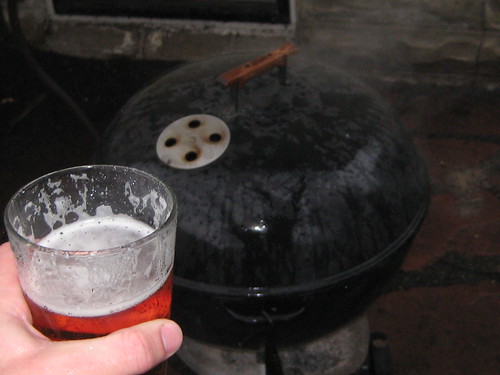
All of this blogging about other people's cheeseburgers left me feeling eager to grill some of my own. That, combined with a stretch of warm spring weather and the specific nature of my wife's pregnancy cravings, meant that the ceremonial first-burger-of-the-season would be grilled on Friday. Much to my dismay, what started as a fantasy week of balmy spring weather quickly turned cold, rainy, and straight-up medieval by Friday afternoon. I did not care. With a Summit Maibock in hand, I donned a raincoat and proceeded to load the chimney and brush the grate.

Americans love cheeseburgers. However, our sterile, Walmartian culture has completely fucked up this simple pleasure. In fact, you might say the standard American burger is FUBAR. We have ruined the hamburger patty. We have stripped the cheese of a soul. We have reduced the toppings to bland, watery, and/or chemical soaked afterthoughts. What remains is a previously sickly, previously frozen, previously in a CAFO sandwich-type-thing that is hardly fit for consumption by American pets. I mean that. I seriously mean that. And I'll stop my rant there. You read this blog because you already grind your own grass-fed beauties, right?

Time travel is possible. When you grind your own high quality, grass fed beef you will experience the delicacy enjoyed by many of our grandparents before the convenience age. When you choose to assemble a cheeseburger from the simplest, best ingredients that you can possibly find (within your local food economy), the utilitarian cheesburger is transformed into something truly sublime. Even the French have acknowledged the perfection of a grilled cheeseburger.

The only special equipment you need is a basic meat grinder - I use the Kitchen-Aid grinder attachment, but a manual countertop grinder also works well, and will earn you respect from your bad-ass grandfather.

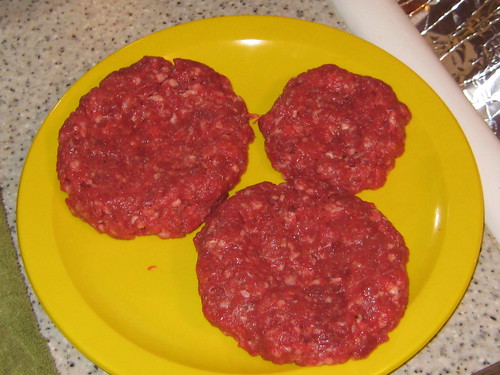
Does your gray, industrial, frozen patty look like this? I think not. So buy some respectable beef and grind your own damn burgers. It will expand your mind.

Ingredients for a burger that transcends time, space, and industrial food culture:

  • 2 lbs chuck roast, from grass fed cows raised by a small local producer (I really like Thousand Hills)
  • 1 tbsp Worcestershire sauce
  • 1 tbsp olive oil
  • freshly ground black pepper, to taste
  • kosher or sea salt, to taste
Technique:
  1. Put your grinder components and two large mixing bowls in the freezer
  2. Trim the beef to remove any tough connective tissue or large pieces of fat (but don't be too surgical or you'll risk grinding meat that's too lean - grass fed beef has very little fat to begin with)
  3. Cut trimmed beef into one inch chunks
  4. In one of the mixing bowls, combine meat with black pepper and salt
  5. Grind meat mixture through the small die into the other chilled bowl
  6. Pour Worcestshire sauce and olive oil into bowl, mix with a wooden spoon until liquids are incorporated (do not over-mix)
  7. Chill the meat in your refrigerator for 15 minutes to keep the meat cold (this is critical) - this is a good time to light the grill
  8. Using your hands, form the meat into 4 equal patties. Each should be about 1 inch think. Press your fingertips into the center of each patty to make them slightly concave (this helps them cook evenly and hold their shape)
  9. Grill over very hot coals until an instant-read thermometer registers 125 degrees (for medium rare). Too squeamish for medium rare? You're missing out. Buying good beef and grinding it yourself means you can eat a correctly grilled burger without fear.
*makes 4 celebration-sized grilled hamburger patties

P.S. Spring and Fall are fleeting portions of the grilling season because the mild outdoor temperatures permit the home chef to prepare some elements of the meal on the grill and some in the kitchen. This is especially important for homemade cheeseburgers and french fries. I do not own a deep fryer (sadly), but my wife and I have learned how to make addictive oven fries using a recipe from Cooks Illustrated. I'll feature our version of that recipe in an upcoming post.

Wednesday, March 18, 2009

extremely fast food: new "pizza vending machine" unveiled in italy

Redefining the concept of convenience food, an Italian business man has just introduced a new vending machine that creates hot pizzas in about three minutes. The pizza-centric "Slice" blog, which is part of the Serious Eats community, posted a photo and additional information earlier this week. Read the full post here.

While Italians typically value high-quality, local ingredients, I don't expect these machines to come stocked with artisanal mozzarella and seasonal, heirloom tomatoes. My advice: buy a slice from a local vendor, which also supports a several local jobs, rather than pumping money into this mass-produced, slightly depressing concept.

Monday, March 16, 2009

buy hydroponic. lettuce.

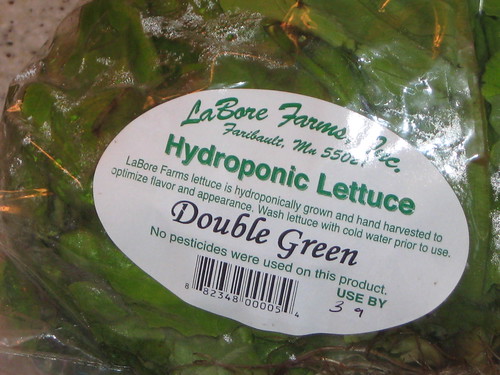
I've had it. I'm not going to buy lettuce from California any more. Picture this: A small head of green lettuce grows in the dirt for many weeks. The lettuce, which is about 95% water, is then picked, washed, and placed in a huge box with hundreds of other heads. The box is placed on a semi trailer with many other boxes of lettuce. The truck drives from some town in California's central valley to St. Paul, MN, where some dude unloads it into the storage room of a grocery store, and someone else puts it in the produce section. Then someone drives to the store to buy it, they return home, and they put it in their refrigerator, where it may wilt before it is ever eaten. This head of lettuce, which, don't forget, is frickin' 95% water, just traveled over 2,000 miles to meet this basic "need." Does that make any sense? It's akin to growing bottles of water iand shipping them thousands of miles to be consumed by someone who already has water. Yes, we do that, too.For that very reason, northern food economies should support more greenhouse and hydroponic produce growers. From May to October, farmer's markets and co-ops carry an excellent assortment of locally grown, outdoor lettuces and leafy greens, but these are clearly not an option in cold months. Hydroponically grown lettuce, by contrast, is extremely versatile because it simply depends on a warm greenhouse and adequate water and nutrients (we have plenty of both in MN, and not so much in CA).

LaBore Farms, a small hydroponic lettuce producer in Faribault, MN recently started selling some value-priced greens at area co-ops and natural foods stores. At approximately $2.99 per bag, these greens are delicious, nutritious and they keep longer in your refrigerator because they only travel about 50 miles to a St. Paul store, vs. the epic transcontinental journey described above. Read more about hydroponic agriculture.

Wednesday, March 11, 2009

the stray bulldog: st. paul diners beware!

Like any blogger I keep an ongoing list of potential post topics, which includes recipes I've used, products I like, and restaurants that are worth writing about, for better or worse. Around the time of the RNC in 2008, rumors began to circulate about a Bulldog opening in St. Paul. Most people I talked to were enthusiastic, as the Bulldog NE has been a huge hit across the river, offering the well-needed combination of a unique beer list and thoughtfully prepared bar food, emphasizing high quality ingredients such as humanely raised Midwest Wagyu beef - more about this later. As a St. Paul resident, blogging about the new location was a no-brainer, as such a bar doesn't really exist in this city (the Muddy Pig comes close for beer, but the food doesn't hold a candle to Bulldog NE).

Anyone who has eaten at the Bulldog NE knows that their burgers are special. As explained on the menu, all burgers are made from pasture-raised Wagyu cattle, which the restaurant grinds in their own kitchen. The result is an expertly prepared cheeseburger, cooked to your preference (where medium rare is actually a rich, juicy pink). At first glance, the Bulldog Lowertown's menu appears very similar, right down to the different types of burgers served. The selections are not a carbon copy of the NE location, but they're arranged similarly.

I've eaten at the Bulldog Lowertown three times now, and overall, I would say the experience was fairly good. The beer list is unrivaled and the tater tots are the definition of munchies. In fact, after eating there the first time I was excited to write a celebratory post describing how this bar is a beacon of hope in the rather bleak downtown St. Paul scene. What ruined that sentiment was not an incident of poor service (though one should read the yelp reviews for Bulldog Lowertown), or singularly bad meal. Rather, I am completely disappointed in the owner's decision to serve lower quality food to the good people of St. Paul, particularly with their burgers. The second time I visited the bar for dinner I took a closer look at the menu, mainly because I didn't recall seeing the word "wagyu" printed anywhere - just the words "100% angus," (words that carries very little meaning these days - MN readers will remember this story).

To gain some clarity around why the menus are different, I placed a call at each restaurant (NE and Lowertown) to ask about the beef they serve, mainly what type it is, where they get it, and why...

Bulldog NE

The woman who answered the phone, who is likely a server, was very friendly and receptive to my question. She confidently explained that the NE location only serves special Wagyu beef from cattle raised in the midwest, which are grass-fed and humanely treated (although not certified organic to her knowledge). All beef is sourced from a small company in South St. Paul called Swanson [no website found], and it is ground in-house at the Bulldog.

She also mentioned that their menu is different from Lowertown; in fact, she said their menu was much more "high end," featuring better ingredients and different recipes. I am not surprised. I have eaten at Bulldog NE several times now and the food has always been solid, with a subtle gourmet edge. If this server's respectful, knowledgeable response is any indication of the restaurant's overall dedication to serving good food, then Bulldog NE should be high on the list of any locavore looking for a sustainable burger and fries, among other good things.

Bulldog Lowertown
In stark contrast, the Lowertown server who picked up the phone initially could not recall where their beef is from, and seemed slightly annoyed by my simple question. However, several seconds later she remembered that "oh yeah, it's angus," which is printed on the menu - so much for knowing more than the customer. When I asked where it came from and if the animals were treated well (such as free range, grass fed, organic, etc.) she asked me to hold so she could ask someone else. It turns out they buy their beef from Shumacher's, a MN-based meat wholesaler, and she didn't "think" it was free range or grass fed, nor did she know anything else about it. She did say that one of their burgers, "The Lowertown" is made with grass fed beef - apparently they use a special blend of meat, sundried tomatoes, etc. that I'm assuming they buy as frozen patties Why else would they only serve one burger that's grass fed? It boggles the mind. Well, perhaps they don't care about differentiating their food from every other thoughtless burger joint around town.

Ok, this post has run on for too long, so I'll sum this up. As a St. Paul resident, I am truly dismayed that the owner of both restaurants has veiled lower quality food under the same brand name in my city. If I decide to eat at any Bulldog again, it will surely be NE because I do care about what I eat and will spend my dollars at a restaurant that cares - in fact, I'm even willing to pay a bit more. Also, I am a marketer by profession, so I understand the need to tailor your offerings to the specific community you intend to serve; however, some brands may not be elastic enough to support too much variation in product quality or service. Quality and consistency are king. I hope St. Paul diners catch on quickly.

P.S. I have emailed the owner directly to ask why they've taken this approach to the St. Paul restaurant. I'll let you know what I hear, if anything...

Sunday, November 30, 2008

the locovore's holiday

Thanksgiving is the food holiday. Christmas and Easter have their hams, and Halloween its candy, but none of the other major U.S. holidays are as explicitly tied to the stomach as Thanksgiving. After all, the image that appears in most people's minds is a feast at which the pilgrims give thanks to native Americans for their generosity in helping the new Americans survive the harsh winters of their new found home. It also celebrates the riches of the fall harvest, which is perhaps the most exciting part of the holiday to gastronomes. So not surprisingly, Thanksgiving is an exceptional opportunity to build a menu of local foods from area farmers and artisans. Even in northern climes, Thanksgiving typically arrives during the very tail end of the fall produce season, and many farmers' markets hold special market days on the Wednesday before Thanksgiving.

What's more, holidays are great excuses to break from routine and seek out some truly unique food items. This makes Thanksgiving an excellent time of year to expand your local food knowledge and cooking repertoire, even if you don't consider yourself a rabid locovore. To give you some examples of how one family decided to spend their Thanksgiving dollars and calories, I've posted our menu below, which we served to 10 family members. We didn't purchase every ingredient from in-state sources (in our case Minnesota), but we did try to design a menu that used as many local products as possible, given our particular climate. I've listed each menu item and the origins of its major components below, as well as any relevant links.

aperitifs
Summit Winter Ale (Minnesota)
Schell's Pilsner (Minnesota)
Vinho verde (Portugal)

hors d'oeuvres
potato chips (Old Dutch, Minnesota)
assorted pickled peppers (our garden)
dry-cured salami (Volpi, Missouri)
marinated olives (Spain)

roasted beet salad
organic gold beets (Wisconsin)
Sartori parmesan-style cheese (Wisconsin)
organic radicchio (California)
olive oil (Italy)
balsamic vinegar (Italy)
organic walnuts (unknown)

stuffed turkey breast with prunes
organic, free-range turkey breast (Farm on Wheels, Minnesota)
organic pork shoulder (Farm on Wheels, Minnesota)
pancetta (Italy)
bread crumbs (old bread from New French Bakery, Minnesota)
parmesan-style cheese (Sartori, Wisconsin)
organic rosemary (Rockspring Farm, Wisconsin)
organic sage (Rockspring Farm, Wisconsin)

acorn squash risotto
acorn squash (Minnesota)
onions (Wisconsin)
organic butter (Organic Valley, Wisconsin)
parmesan-style cheese (Sartori, Wisconsin)
arborio rice (Italy)
olive oil (Italy)

sauteed brussel sprouts with pancetta

brussel sprouts (Minnesota)
organic rosemary (Rockspring Farm, Wisconsin)
pancetta (Italy)

bread
baguettes (New French Bakery, Minnesota)

wine
Yali Cabernet-Carmenere (Argentina)

apple tart
harolson apples (Minnesota)
flour (Minnesota)
organic butter (Organic Valley, Wisconsin)
organic cream (Organic Valley, Wisconsin)
organic eggs (Crystal Ball Farms, Wisconsin)
Cognac (France)

Tuesday, October 7, 2008

harvest your own free range, organic, heirloom chickens

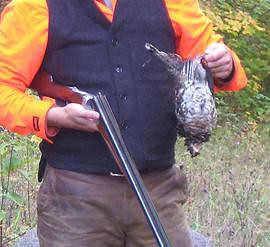
As a stomach driven individual, one of the more fulfilling ways to eat is to participate in each step of the process: harvest, preparation, and cooking. Gardeners know this. Mushroom foragers know this. And yes, hunters know this. I'm saddened by the tension that often exists between people who selectively harvest wild raspberries, and the people who selectively harvest the birds that eat those berries. Hunting is one of my passions, as it's an excellent way to spend time with friends/family, get some exercise, and possibly procure some delicious table fare.

In my home state, Minnesota, we have a plentiful (yet shrinking) amount of wild, open space that supports a massive amount of edible plants and animals. For those of you not familiar with the ruffed grouse, it's basically a wild chicken that lives in new growth forests in the northern United States and Canada. Like other chicken-type birds, ruffed grouse obtain most of their food by searching the forest floor for berries, nuts, tree buds, clover, and other tasty bits. Because they spend the majority of their day on the ground (rather than in the air), their meat and flavor resembles that of a free range, domesticated chicken - white and juicy.

For a long time, Europeans and Americans have understood and respected the utilization of wild food sources, but as lifestyles continue to shift away from local food sources, the perceived importance of ethical, sustainable, hunting practices is waning. This is not to say we should all build our own sod huts and eat only what we kill; rather, it's a matter of revisiting concepts like hunting as part of a broader, sustainable eating culture and philosophy.

To further pique your interest, here's a recipe for the next grouse you procure (either through the sights of your 20 gauge, or the freezer of a friend).

ingredients:

  • one whole grouse (plucked*, with feet and head removed)
  • 2 tbsp high quality butter (softened)
  • 1 tbsp olive oil
  • coarse salt
  • freshly ground black pepper
  • 1 bottle of bold, mildly expensive red wine (how many grouse do you shoot?)
  • one small shallot, minced
A note about plucking wild game: Many people think it's a huge hassle to pluck their game birds, so they skin them. Don't follow their advice - when you remove the skin prior to cooking, you remove the fat (the flavor!) and expose the normally juicy meat to intense heat. Plucking is easy work if you plan ahead. Once the bird is shot, field dress it normally, and find a cool, dark, sheltered location, such as a root cellar, basement, garage, shed, or old refrigerator. Using a piece of string, hang the bird by its feet and let age for 24-36 hours. The secret is simple: soon after the bird is shot, it cools and rigor mortis stiffens the birds muscles, including those that hold the feathers in. By aging the bird, the muscles loosen again, and they can be pulled out with ease. Don't whine. Just trust me.

technique:
  1. preheat your oven to 400 degrees
  2. wash and dry the bird and make sure you've removed any remaining shot (tweezers work well)
  3. smear one tablespoon of the butter all over the bird (inside and out); repeat with the salt and pepper
  4. find a small, heavy bottomed, ovenproof sauce pan or skillet that will hold the bird(s), heat it over medium/high flame, and add the olive oil
  5. once the oil is hot, sear the bird on all sides using a tongs - should be golden brown when you're done (4-6 minutes)
  6. put the pan in the oven and roast for 15-30 minutes (until internal temparature reaches 150 degrees - this is wild game, not some sickly factory bird, so don't worry)
  7. once the bird is ready, put it on a small serving plate and loosely cover with foil
  8. put the pan back on the stove and toss in the minced shallot, saute over low heat for 1 minute (don't burn the f'in shallots!)
  9. add 1/4 cup of the red wine and reduce until the remaining liquid has thickened and resembles a light syrup.
  10. off heat, stir in the remaining tablespoon of butter. then carve the bird and drizzle with the sauce.
  11. pour and drink the remaining wine with elegant-yet-woodsy confidence.
*serves 1 tired, accomplished hunter, or two normal people (as a first course)

Friday, September 19, 2008

from animal, vegetable, miracle: agricultural plant diversity

Headed to the grocery store today? Read this beforehand:

[from page 49 of Animal, Vegetable, Miracle] According to Indian crop ecologist Vandana Shiva, humans have eaten some 80,000 plant species in our history. After recent precipitous changes, three-quarters of all human food now comes from just eight species, with the field quickly narrowing down to genetically modified corn, soy, and canola.


Wednesday, September 17, 2008

diets are not sustainable

Finally, a short, compelling article from the NY Times outlining the current shift from fad, deprivation-style diets to sensible, seasonal meals - that are also enjoyable. Imagine that!

Here's a gem:

The market research firm NPD Group gets a glimpse of national eating habits through the food diaries it has collected from 5,000 consumers since 1980. The percentage of those consumers who are on a diet is lower than at any time since information on dieting was first collected in 1985. At the peak in 1990, 39 percent of the women and 29 percent of the men were dieting. Today, that number has dropped to 26 percent of women and 16 percent of men.

And another:

[...] there are other indicators of a shift in eating habits. In May, the market research firm Information Resources reported that 53 percent of consumers say they are cooking from scratch more than they did just six months ago, in part, no doubt, because of the rising cost of prepared foods.

Sales of organic foods have surged, and the number of farmers’ markets has more than doubled since the mid-1990s.

Wednesday, September 10, 2008

fast food promotions for hospitals are not sustainable

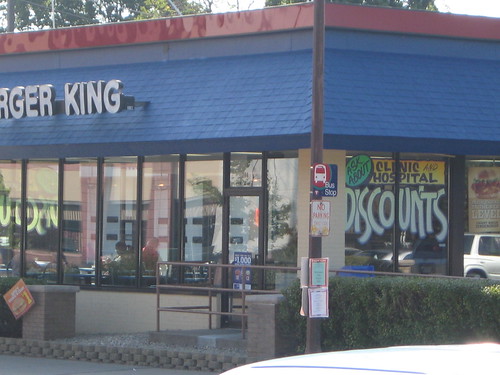
While walking down the street the other day, I noticed a shameless promotion painted on the window of a national fast food franchise, which is located right next to a major children's hospital.


Yes, the sign says: "Ask about our clinic and hospital discounts." Enough said.